That’s it, I guess. I’ve had the impression the Huffington Post was going downhill for a good long time now, and it’s now confirmed. This, on the front page?

Is not funny or clever. It’s just downright creepy and exploitative.
The milieu through which we swim
That’s it, I guess. I’ve had the impression the Huffington Post was going downhill for a good long time now, and it’s now confirmed. This, on the front page?
Is not funny or clever. It’s just downright creepy and exploitative.

I’ve a runner-up, but it does contain spoilers for the end of Doctor Who (New) season four, so it’s just a link – be warned.
Under guidelines meant to minimise compensation payouts for people who “contribute to their own ordeal during a criminal incident”, such as people taking part in the crime, or offering provocation for an attack, certain bureaucrats decided that women being out in the world socialising in a perfectly legal fashion were liable for provoking their own rapes, and cut their compensation payouts accordingly. Public outcry has meant that the decision has been reversed, but how could they have been so wrong headed in the first place?
It could be something to do with the way that the media reports rape, of course. Melissa reports [trigger warnings], and then responds to a typical Daily Mail women-blaming op-ed (the pictorial juxtaposition has to be seen to be believed):
The piece itself is just unrelentingly infuriating, as its male author offers up gems like:
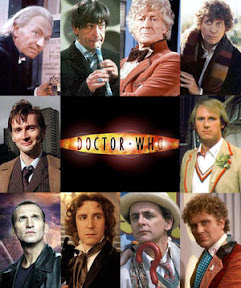 As part of an excellent essay on the role of the Nostalgia Factor in the Russell T. Davies (RTD) era of Doctor Who, Iain Clark makes many excellent points about both the new and the old series of Who, why Sarah Jane Smith was really the only choice as a returning former-companion for the new generation of Who-watchers, and the differing emphasis paid to character vs story in each.
Clark is writing what purports to be merely a review of the one episode of the second RTD season, yet by the end he’s engaging in an analysis of the entire Rose Tyler era in counterpoint to what we see of the characters in School Reunion.
I took a lot of flak in a recent discussion elsewhere for suggesting that women who have cosmetic enhancement surgery might be responding to just a little bit more than their own psychological insecurities about attracting a mate – that there might actually be some much larger social issues about why women choose to be surgically enhanced i.e. that it’s not just about getting sex, even if the surgery they are having is aimed at increasing their sexual appeal (by certain widely acknowledged to be fucked up standards).
Here’s just one high-profile example of how women are trained from a very young age to believe that their looks matter more than anything else about them, not just when it comes to finding a sexual partner, but also in terms of recognition and reward in other aspects of life:

Wonder whether it generated any outrage when originally published? Nah, it’s “just a joke”

Most of the world is calling on both Russia and Georgia to show restraint in their current conflict, without attempting to cast one as more of an agressor than the other.
Not Campaign McCain

This photo is what passes for sports journalism at the Sydney Morning Herald nowadays. I did not crop this photo; the Herald did.
What would Tiananmen Tank Man Do?
I don’t think he’d watch the Olympics. Of course I can’t know this, because we don’t know who he was, whether he is still alive, or whether he would actually be an enormous fan of the Olympics right now.
Still, I am not watching these Olympics, simply because I can’t square my conscience with supporting the regime’s propaganda exercise.
I’m enjoying “Barrayar” right now, from Lois McMaster Bujold, and I thought I’d share an excerpt. Bujold is a keen observer of human interactions, and readers with complicated medical problems might relate to some of this.
Commander Cordelia Naismith (also known as Lady Vorkosigan), a former Betan military commander, is in a doctor’s office on Barrayar. She is being checked out after a series of traumatic experiences.
 Hoyden About Town